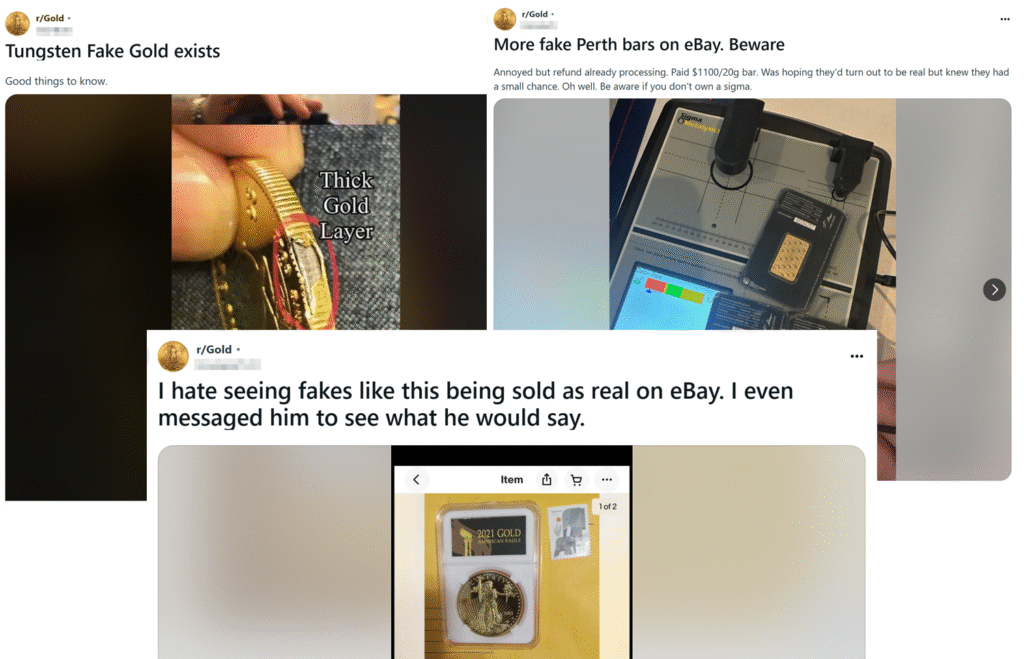
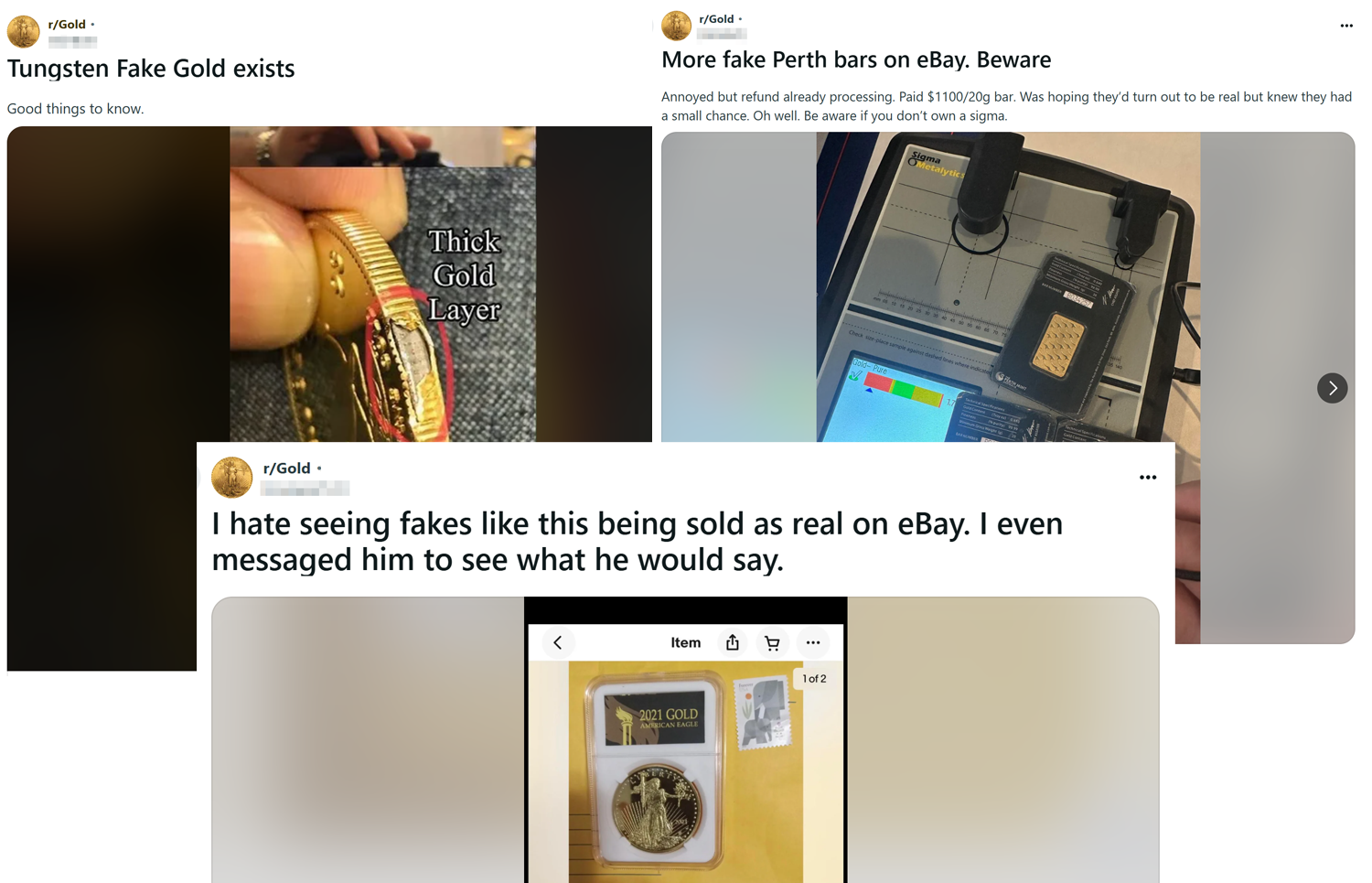
Gold has been a highly valued asset throughout human history, and this value has encouraged unscrupulous people to produce fakes. Gold’s unique properties mean it’s not a straightforward metal to counterfeit, but over the years sophisticated fake gold has been produced. With gold prices at historically high levels, the incentive to fake it has never been greater, and stories of buyers being deceived are common across online forums and marketplaces alike.
So how do you tell if gold is real? The answer depends on how much certainty you need. A quick magnet test takes seconds but has clear limits. A specific gravity calculation is more rigorous but still not foolproof. Professional-grade tools like XRF analysers leave almost no room for doubt, but aren’t something most people have at home.
This guide walks through every practical method for testing gold, from fast checks you can do right now to the equipment used by dealers and institutions. Whether you’re verifying a gold coin, a gold bar, or a piece of gold jewellery, you’ll know what each test can and can’t tell you.
How to Tell If Gold Is Real
Before reaching for any testing equipment, there are three things you can check in under a minute that will immediately raise or resolve doubts about a piece of gold.
- Check for hallmarks. Genuine gold is almost always stamped with a purity mark. On bars and coins from reputable mints, this is clearly printed or engraved. On jewellery, look for a small stamp, known as a hallmark. This is typically inside a ring band, on a clasp, or near the fastening of a chain. Common marks include 999 or 999.9 (24 karat pure gold), 916 (22 karat), 750 (18 karat), 585 (14 karat), and 375 (9 karat). The absence of any hallmark doesn’t automatically mean a piece is fake, but it warrants closer inspection. A hallmark that looks blurry, raised rather than engraved, or inconsistent with the claimed origin is a warning sign.
- Look at the colour. Real gold has a warm, consistent yellow tone that doesn’t vary across the surface. Be cautious of pieces that look unusually bright or brassy, show discolouration around edges or contact points, or reveal a different-coloured metal underneath where the surface has worn away. Gold-plated items often give themselves away at wear points (hinges, clasps, and edges) where the base metal shows through. Lower purity gold may differ in tone, but should still be consistent throughout the alloy.
- Feel the weight. Gold is one of the densest metals on earth. A genuine gold coin or bar should feel noticeably heavy for its size, heavier than most people expect. If a piece feels too light, or comparable in weight to a coin you’d find in your pocket change, that’s a strong indicator something is wrong. This check is particularly effective with coins, where the expected weight and dimensions are well-documented and easy to look up.
These checks won’t give you certainty, a skilled counterfeit can pass all three, but they’re a fast first filter, and they cost nothing.
At-Home Gold Testing Methods
The visual checks above are a useful first pass, but they won’t catch sophisticated fakes. The following methods allow you to test gold at home in further detail. Each method probes a different physical property of gold. No single home test is definitive on its own, but used together they build a much clearer picture.
Gold Magnet Test
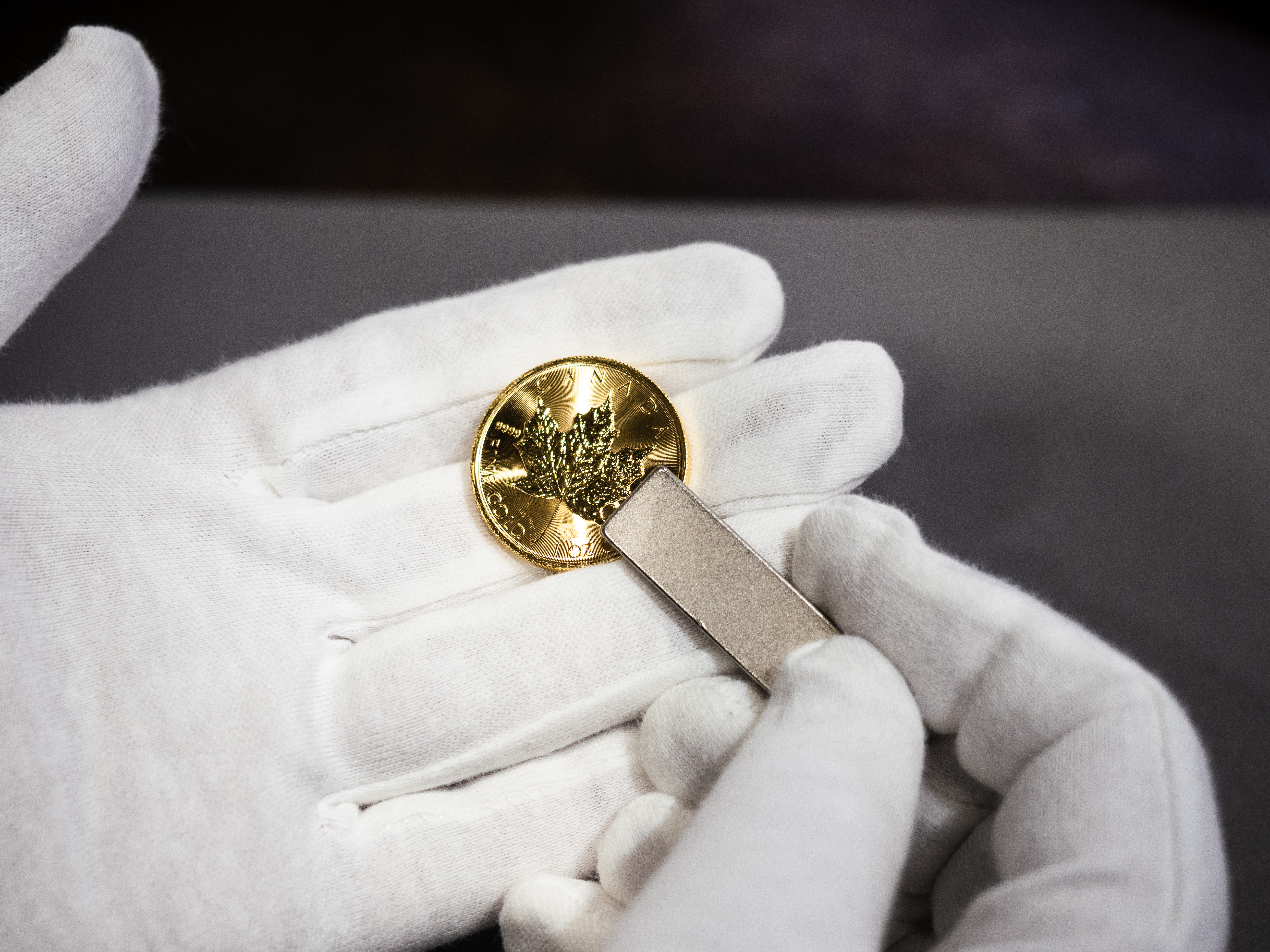
Pure gold is not magnetic. If a piece is strongly attracted to a magnet, it almost certainly contains ferrous metals and is not genuine gold.
What you need: A strong rare-earth (neodymium) magnet, a fridge magnet won’t be sensitive enough.
How to do it: Hold the magnet close to the item and observe whether there’s any pull or attraction.
Limitations: This test rules things out more than it rules them in. Many fake gold items, particularly those made from brass, copper, or tungsten, are also non-magnetic, so passing the magnet test does not confirm authenticity. Lower purity gold items may also be slightly magnetic due to the presence of other metals (such as nickel or iron) in the alloy.
Gold Scratch Test
Scratching the surface of a suspected gold item can reveal whether the gold colour goes all the way through or is just a thin layer over a base metal.
What you need: A small metal file or a sharp edge.
How to do it: Choose an inconspicuous spot, such as the back of a pendant or the inside edge of a ring, and make a shallow scratch. If the colour beneath the surface differs from the gold exterior, the item may be gold-plated.
Note: This test will leave a visible mark, and could reduce its resale value as a result. Only perform it on items you own and are willing to scratch.
Gold Ceramic Test
Dragging gold across unglazed ceramic produces a streak whose colour reveals whether the metal is genuine.
What you need: An unglazed ceramic tile or the unglazed underside of a porcelain dish.
How to do it: Drag the item firmly across the ceramic surface and examine the streak it leaves. Real gold leaves a gold or yellow streak. A black or dark grey streak indicates the item is likely pyrite (fool’s gold) or another base metal.
Note: Like the scratch test, this will mark both the ceramic and potentially the item itself. Use a low-visibility surface of the piece where possible. An unglazed ceramic tile is a practical substitute for a touchstone, which combines this streak method with acid application for a more precise assessment of karat.
Gold Touchstone Test
The touchstone test is one of the oldest methods of assessing gold purity, used by jewellers and traders for centuries. A touchstone is a smooth, fine-grained dark stone — traditionally black basalt or lydite — specifically suited to producing a clean, consistent streak when gold is rubbed across it. Many acid testing kits include a touchstone for this reason.
What you need: A touchstone and a gold testing acid kit.
How to do it: Rub the item firmly across the surface of the touchstone to leave a visible streak. Apply a drop of acid — the strength will depend on the karat you’re testing for; your kit should specify which acid to use at which purity level. Observe the reaction. A streak from high-karat gold (18 karat and above) will dissolve slowly or not at all with standard nitric acid. Lower-karat gold will dissolve more quickly. A streak from base metals will dissolve rapidly and may turn green or bubble.
Testing for 24 karat gold requires aqua regia (a mixture of nitric and hydrochloric acid) as pure gold resists nitric acid alone. Better-quality acid testing kits will include solutions for multiple karat levels.
Safety: The same precautions apply as for the acid test below — wear gloves and eye protection, work in a ventilated area, and follow the kit’s disposal instructions.
Gold Acid Test
The acid test is one of the more reliable home methods. Nitric acid reacts with base metals but does not affect real gold, making it an effective way to detect plating or alloys.
What you need: A gold testing acid kit (available from most jewellery or bullion supply retailers). These typically include nitric acid solutions calibrated for different gold karats.
How to do it: Make a small scratch in an inconspicuous area of the item to expose the inner metal. Apply a drop of acid to the scratch and observe the reaction. No reaction indicates gold of at least the purity the acid is calibrated for. A green reaction suggests a base metal like copper. A milky reaction may indicate silver.
Safety: Nitric acid is corrosive. Wear gloves and eye protection, work in a well-ventilated area, and keep the acid away from skin and clothing. Follow the disposal instructions included with your kit. As with the scratch test, this method will likely leave marks on the item, and could reduce its value.
Gold Ping Test
The gold ping test is a popular method for testing gold coins at home. Real gold produces a distinct, clear ringing tone when struck as a result of its density and molecular structure. Base metals produce a duller, shorter sound.
What you need: Another coin or small metal object to tap with. Several smartphone apps can also analyse the sound frequency and compare it against known values for gold coins.
How to do it: Balance the coin on the tip of your finger so it can vibrate freely. Tap it lightly with another coin or metal object and listen. A genuine gold coin should ring clearly for one to two seconds. A dull thud or a very short ring suggests the composition is off.
Limitations: This test works best with coins of a known type, where the expected sound profile is documented. It is less useful for bars or jewellery, and ambient noise can affect the result.
Gold Density Test
Gold is one of the densest naturally occurring metals, with a specific gravity of approximately 19.3. Because this density is difficult to replicate with cheaper materials without noticeable discrepancies in size or weight, measuring it provides a meaningful check on authenticity.
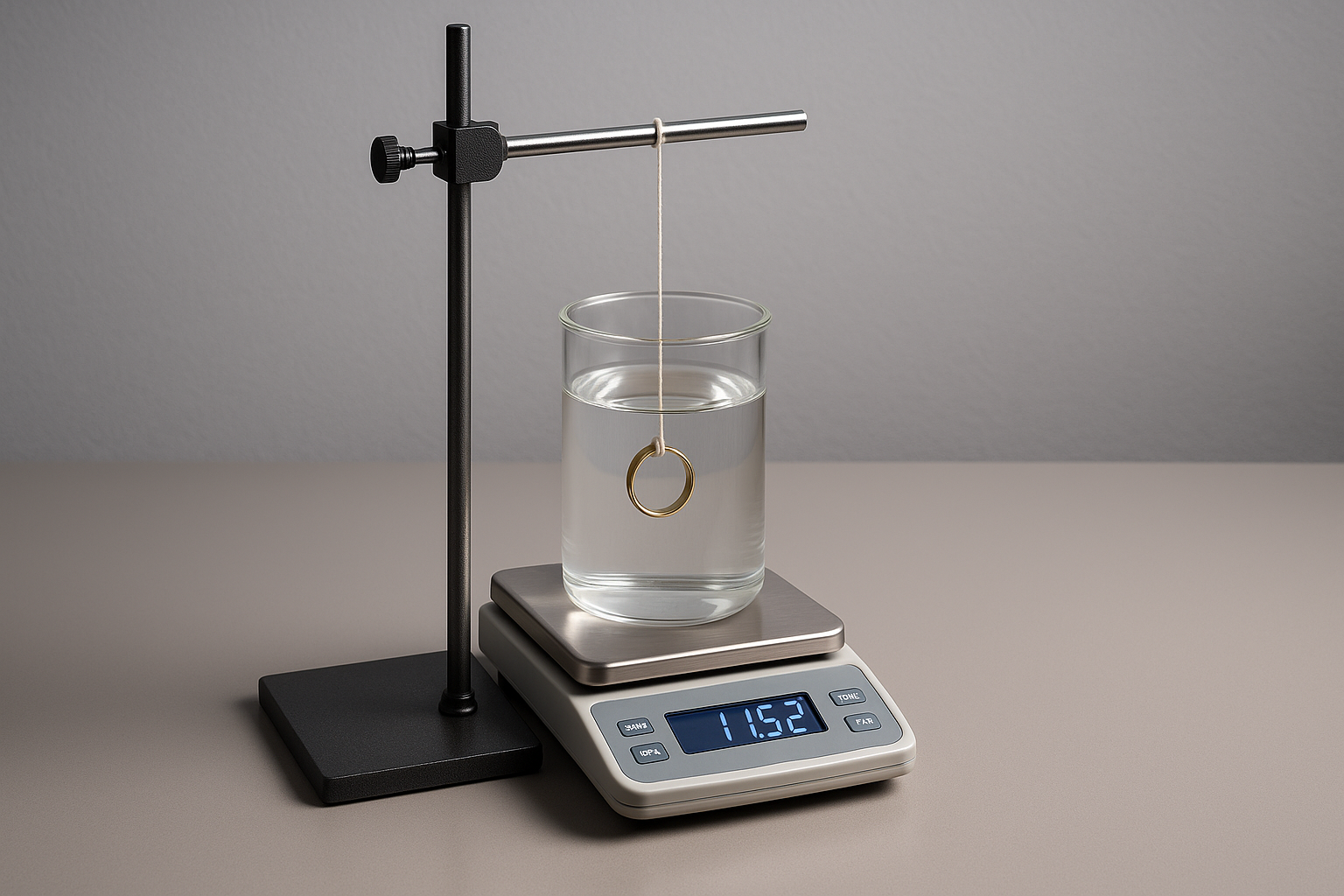
What you need: Your kitchen scales, and a container of water deep enough to fully submerge the item.
How to do it:
- Weigh the item in air and record the result.
- Suspend the item in water, fully submerged but not touching the bottom or sides, and record the submerged weight.
- Calculate specific gravity using the formula: Specific Gravity = Weight in Air ÷ (Weight in Air – Weight in Water)
A result close to 19.3 is consistent with pure gold. Lower-karat gold will produce a lower figure, 18 karat gold sits around 15.6, for example. A result significantly outside the expected range for the claimed purity is cause for concern. The table below shows the approximate density of common gold purities, alongside other metals:
| Metal | Purity | Specific Gravity Range |
|---|---|---|
| 24K Gold | 99.99% | 19.13-19.51 |
| 22K Gold | 91.67% | 17.45-18.24 |
| 18K Gold | 75% | 14.84-16.12 |
| 9K Gold | 37.5% | 11 |
| Silver | 99.9% | 10.49 |
| Platinum | 99.9% | 21.45 |
| Lead | 99.9% | 11.34 |
| Tungsten | 99.9% | 19.25 |
Limitations: This method will not catch gold-plated tungsten, since tungsten’s density (19.25) is very close to gold’s. It also cannot detect internal voids or layered counterfeits. Treat it as a useful indicator rather than a final verdict.
Gold Testing Kits and Equipment
The home tests in the previous section require nothing more than items you likely already have — a magnet, a bowl of water, a ceramic tile. But if you’re testing gold regularly, or want more confidence than improvised methods can provide, there’s a range of dedicated gold testing equipment worth considering. These tools range from simple optical aids that help you examine hallmarks closely, to electronic devices that test the internal composition of a piece without touching it.
Magnifiers
A good magnifier is one of the most useful and affordable tools for anyone handling gold. It lets you examine hallmarks properly, confirming the stamp is genuine and engraved rather than printed or raised, and spot surface irregularities that suggest plating or wear. They can also be useful when testing gold coins, allowing you to get a clear view of the small details in many coin designs. Fake gold coins often have discrepancies in their designs due to lower quality production.
The Hand Held 7x Magnifier with LED is a practical everyday option, with a bright white LED and a 7x aspheric lens that makes hallmarks and coin details easy to read. For closer inspection of fine detail, the Magnifier with LED Light, 10x Magnification provides a stronger field of view — useful when examining small stamps or looking for signs of surface wear at contact points.
Precision Scale and Calipers
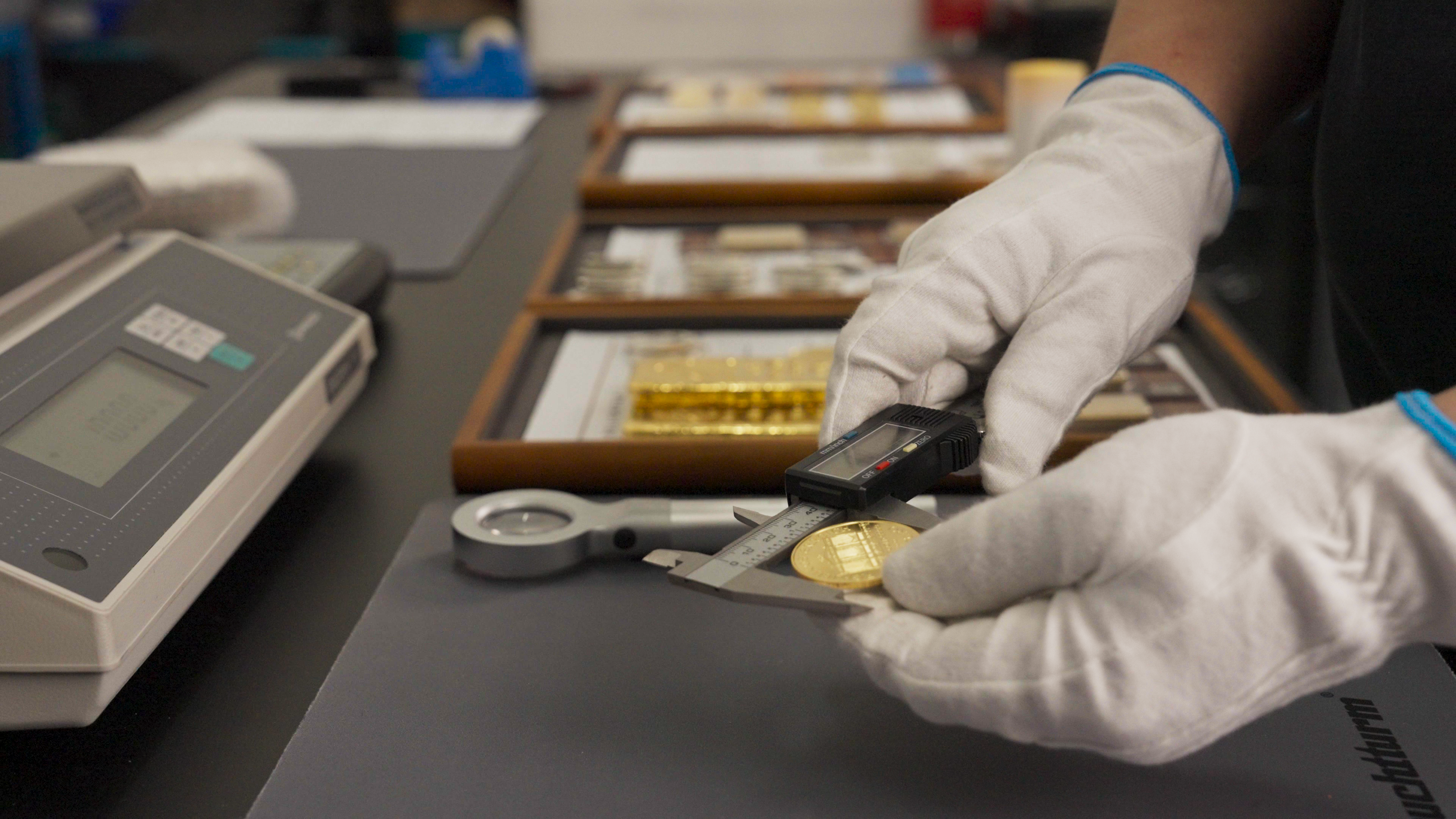
As described in the density test above, accurately measuring an item’s weight and dimensions is one of the most reliable indicators of authenticity. Gold’s high density means that a genuine piece will have a very specific relationship between its physical size and its mass, one that’s difficult to replicate convincingly with cheaper materials. Coins are often produced to quite exact specifications (with some minting allowances), and these details can readily be found online.
Using a high accuracy digital scale such as the Libra 500 allows you to take weight measurements down to 0.01g. Paired with the Digital Sliding Gauge Caliper (150mm), you can check both the weight and the dimensions of coins and bars against published specifications, a combination that catches a wide range of counterfeits.
Professional Gold Testing
Home tests provide a strong level of assurance for most situations, but there are circumstances where professional testing is the right call. If you’re buying or selling a high-value item, have a piece that raises doubts you can’t resolve at home, or need documented proof of purity for insurance or resale purposes, professional gold authentication gives you a result you can rely on.
When to Escalate
It’s worth seeking professional testing if any of the following apply: the item is high in value and the cost of being wrong is significant; home tests have produced inconsistent or inconclusive results; the piece is unusual, unmarked, or comes with a provenance you can’t verify; or you simply need a formal record of authentication — for example, when settling an estate, securing a loan against gold, or listing a significant item for sale.
Precious Metal Verifier
For collectors and investors who want the highest level of confidence short of laboratory testing, an electronic precious metal verifier is the standout recommendation.
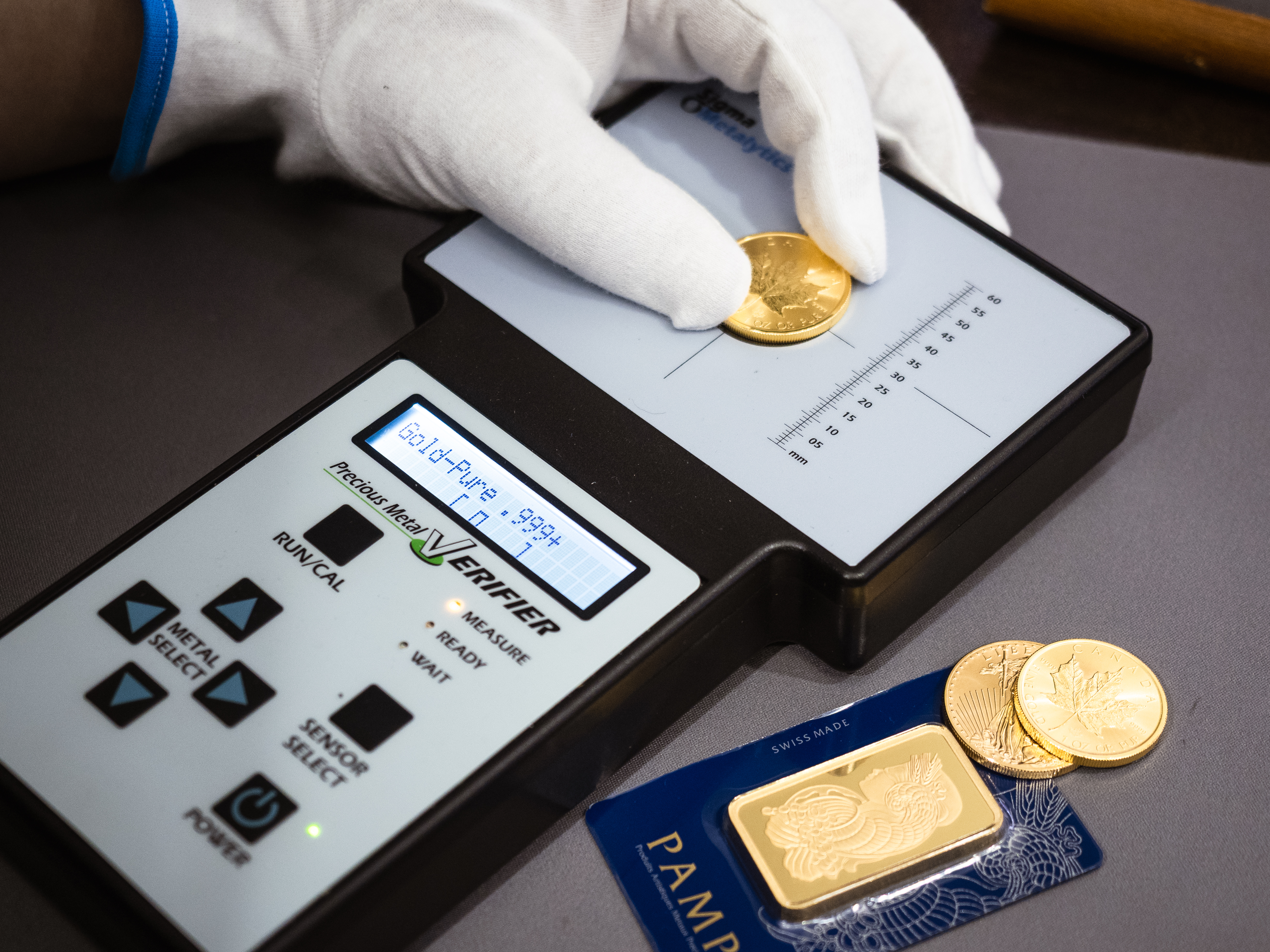
The Sigma Metalytics PMV Original uses electromagnetic signals to measure the resistivity of a metal — a physical property unique to each element. Unlike surface tests, it reads through the entire piece, detecting whether the internal composition matches the claimed metal. It works through assay cards, coin capsules, and thin packaging, so your items never need to be removed or handled.
The PMV comes with three wand attachments (small, large, and bullion) to accommodate different item sizes, and tests gold, silver, platinum, and palladium. It’s widely used by dealers and serious collectors, and is compact and portable enough for private home use.
XRF Testing
X-Ray Fluorescence (XRF) is the professional standard for non-destructive gold purity analysis. The item is exposed to high-energy X-rays, which cause surface particles to emit secondary radiation. Since each element emits at a unique wavelength, an XRF analyser can identify the exact elemental composition of the piece, confirming purity and detecting any foreign metals or plating in a matter of seconds, without marking or altering the item in any way.
XRF testing is used by dealers, refineries, and institutions worldwide. It is fast, accurate, and provides a permanent record of results.
Fire Assay
Fire assay is the oldest and most precise method of determining gold purity, and it remains the benchmark used by assay offices and refineries when absolute accuracy is required. A small sample is removed from the item (making this a destructive test) and combined with lead and flux before being heated in a furnace. The base metals are absorbed, leaving only the precious metal behind. That residue is then weighed to calculate the exact purity of the original piece.
Because fire assay consumes part of the item, it is generally reserved for situations where the highest possible accuracy is needed, or where other methods have left doubt. For most individual coins and bars, XRF testing provides sufficient confidence without the need for a sample to be removed.
BullionStar’s Authentication Process
BullionStar uses professional-grade equipment, including an Olympus Vanta GX benchtop XRF analyser and the Sigma Metalytics PMV Pro, to authenticate the bullion we hold and sell. These tools test composition at depth, not just at the surface, and flag anything outside the expected parameters for the claimed metal and purity. Every item we sell has passed this process before it reaches a customer.
Frequently Asked Questions
Will a magnet stick to real gold?
No, real gold is non-magnetic, so a strong magnet should have no effect on a genuine gold item. However, passing the magnet test alone does not confirm authenticity — common counterfeit metals such as brass, copper, and tungsten are also non-magnetic. Use the magnet test as a quick filter, not a final verdict.
What’s the most accurate at-home gold test?
The density test (specific gravity calculation) is the most rigorous method available without specialist equipment, since it measures a physical property that’s genuinely difficult to replicate. For the highest confidence at home, pair the density test with a Precious Metal Verifier such as the Sigma Metalytics PMV.
Can I test gold with vinegar?
Vinegar is sometimes suggested as a home test. Real gold won’t react, while base metals may discolour slightly. In practice the reaction is subtle and unreliable, and vinegar is too weak an acid to produce a clear result. A proper acid testing kit using nitric acid calibrated to specific karats is far more informative, and we’d recommend that over vinegar for anyone serious about getting a useful answer.
Can gold-plated items pass home tests?
Yes, this is one of the most important limitations to understand. Gold-plated items can pass the magnet test (if the base metal is also non-magnetic), the colour check, and even produce a gold-coloured streak on ceramic. The scratch test and acid test are more effective at detecting plating, since they penetrate the surface layer. An electronic precious metal verifier is the most reliable way to identify plating at home, as it reads the internal composition rather than the exterior.
Does real gold tarnish?
No, one of gold’s defining characteristics is that it does not oxidise or tarnish under normal conditions. If a piece labelled as gold has developed discolouration, green marks, or a dull film over time, it is almost certainly gold-plated or a base metal alloy. Pure gold and high-karat gold jewellery should retain their appearance indefinitely without any special treatment.
What do the numbers on gold hallmarks mean?
Gold hallmarks indicate purity, expressed as either a karat value or a millesimal fineness. Common marks include 999 or 999.9 (pure gold, 24 karat), 916 (22 karat), 750 (18 karat), 585 (14 karat), and 375 (9 karat). Items from reputable mints will also carry a mint or assayer’s mark alongside the purity stamp.
Buy Gold You Don’t Have to Test
Every method in this guide exists because gold can be faked — and because the consequences of buying a fake can be significant. Knowing how to test gold is genuinely useful, particularly when verifying inherited pieces, gifts, or secondhand purchases. But testing is always reactive. It tells you what you have after the fact.
The more reliable protection is buying from a source where authentication has already been done. BullionStar sources directly from the world’s most respected mints and refineries, and items are verified using professional-grade XRF and resistivity testing before it reaches a customer. When you buy from us, you’re not relying on a magnet test or a density calculation, you’re buying gold that has already passed scrutiny that most home methods can’t replicate.
Whether you’re looking for a gold bar for long-term savings or a gold coin to add to a collection, the authentication is built in.